Vector data — decoded surface observations (TimescaleDB / PostGIS)
Goal: publish continuously decoded surface observations (SYNOP, METAR…) as WMS layers with a TIME dimension and as WFS features, readable by every replica the moment they are inserted, with the canonical unit carried through (ADR-0003).
flowchart LR
    SRC[SYNOP · METAR · …] --> DEC[Decoding service<br/>simulator in this prototype]
    DEC -- "INSERT (canonical unit,<br/>source_unit kept)" --> DB[(schema obs<br/>station · observation hypertable<br/>publication views)]
    GS[GeoServer ×N] -- "jdbc/meteo (read-only,<br/>datastore obs-db, schema=obs)" --> DB
    PLUG[geoserver-init plugin<br/>VECTOR_LAYERS ConfigMap] -- "feature types + TIME dimension<br/>title/unit from reference data" --> GS
C[WMS TIME · WFS · CQL] --> GSDecision: ADR-0011.
Artifacts: poc/06-vector/ (schema, Jobs, tests) and the geoserver-init
plugin (ensureVectorLayers).
Prerequisites
Sub-projects 1 to 5 (database, image, cluster, S3, reference data in
mosaic.parameter). Secrets: decoder-db (decoding-service account),
meteo-reader.
Data model (schema obs, owned by the decoding service)
| Object | Role |
|---|---|
station |
One row per station: identifier (ICAO/WMO), name, geom Point 4326, elevation |
observation |
TimescaleDB hypertable, PK (station_id, time, param_key) + surrogate fid ; value in the canonical unit, source_unit kept (METAR temperatures arrive in Celsius), message_type |
obs_air_temperature (view) |
Full series joined with stations — backs the TIME-enabled layer |
obs_latest_air_temperature (view) |
Latest value per station (DISTINCT ON … ORDER BY time DESC) — backs the map-friendly layer |
obs.gt_pk_metadata (view) |
Exposes the virtual key fid of the views to GeoTools |
The schema is created by a Job run with the operator account
(k8s/job-init-obs-schema.yaml); GeoServer's reader gets SELECT through the
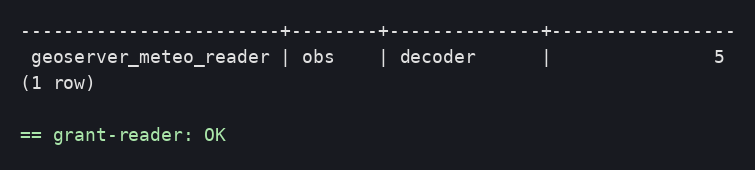
grant-reader Job (DATA_SCHEMA=obs). The two init Jobs may race: the grant
Job simply retries until the schema exists (backoff).
Volumetry at scale (one row per parameter — does it hold?)
A message carries dozens of parameters, so the row-per-parameter model must be sized honestly. Order of magnitude for the full GTS: ~20 000 SYNOP/METAR messages per hour × ~30 parameters ≈ 600 k rows/hour ≈ 5 billion rows per year — several hundred GB raw with the current row layout. The stack is chosen for exactly this:
- Time chunking (hypertable): queries only touch the chunks in their time range; indexes are per-chunk and stay small — never one year-wide index.
- Native columnar compression on chunks older than a threshold
(
segment_by station_id, order_by time): typically 90–95 % reduction on this kind of data, bringing a year down to tens of GB while remaining queryable by GeoServer. - Integer keys (planned with the real decoders):
param_key text→smallintFK to the referential andstation_id text→intsurrogate roughly halve the row again. - Retention: keeping a full year of raw observations online in the GIS
database is a policy choice, not a requirement (
drop_chunks+ archive) — see ch. 11, retention ownership.
Why row-per-parameter rather than one column per parameter: message families
are heterogeneous (a METAR and a SYNOP do not carry the same quantities — a
wide table is sparse everywhere), a new parameter is a referential row instead
of an ALTER TABLE on billions of rows, per-quantity publication views stay
trivial, and columnar compression makes the narrow layout cheap. A raw
message table (one row per received message, for audit/replay) can live
alongside the values without changing this model.
Decoder simulator
ingest.py obs --from 2026-09-02T06:00Z --hours 3 --step-min 10 (same
container as the raster ingestion) upserts 10 demo stations across Europe and
Asia and generates one observation per station and per 10-minute step:
synthetic 2 m temperature in Celsius, converted to kelvin on insert
(source_unit=Cel), alternating METAR/SYNOP message types. Real
SYNOP/BUFR/TAC decoding is out of scope of the prototype. Run it as a Job
(k8s/job-ingest-obs.yaml, via ../05-ingestion/ingest.sh); a CronJob or the
real decoding service takes over in production.
Publication by the plugin (declarative)
VECTOR_LAYERS="name|view|timeAttribute(- for none)|param_key|title;…" in the
geoserver-mosaics ConfigMap. On each pod start the plugin ensures:
- a second datastore
obs-dbon the same JNDI resourcejdbc/meteowithschema=obs(one datastore per schema; the stores always name a JNDI resource, never a URL); - one feature type + layer per view, with
TIMEenabled on the given attribute (continuous interval presentation — listing every observation instant would be meaningless), default = most recent; - title and abstract carrying the canonical unit read from
mosaic.parameter(Surface observations — air temperature (K)).
No GWC tile layer is created for observation layers: requests are time-qualified and served straight by WMS.
Verification (tests poc/06-vector/tests/)
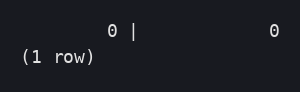
Schema, grant (retry visible), 180 observations ingested:

Startup: datastore and layers created/verified:

01 Capabilities: titles with the unit, continuous TIME dimension
(start/end/PT1S, default = latest):

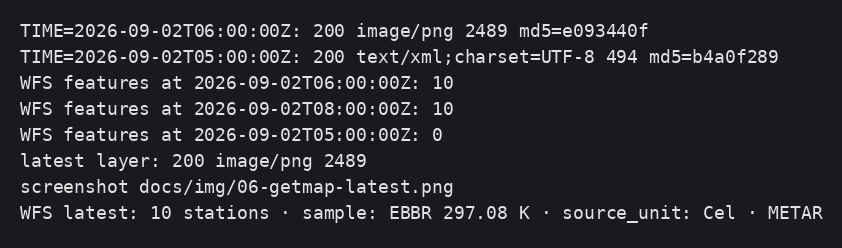
02 The TIME dimension really filters: an in-range instant renders the
stations; an out-of-range instant is rejected with an explicit
ServiceException (fail loud — consistent with the project rule); WFS
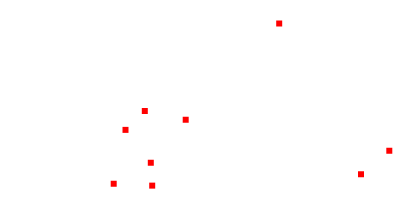
counts per instant: 10, 10, 0. Two valid instants render identical images by
design (the default point style does not encode the value — thematic styling
comes with sub-project 8):
03 One more hour ingested → TIME extent and feature counts grow on both
pods, no restart, no notification (the views read the live tables):

04 The reader stays read-only (permission denied on INSERT) and the layers
survive a pod replacement:

Deviations and pitfalls observed
- A WMS request outside the TIME domain returns a
ServiceException(Could not find a match for 'time' value) rather than an empty map — document it to client teams. - Identical images for two valid instants are expected with the default style; the real proof of filtering is WFS/CQL counts (test 02).
gt_pk_metadatamust be visible inside the datastore's schema: theobsschema exposes a filtered view over the shared table.